Now that Government has listened to the research community, will NSERC?

“I’m in Ottawa at the moment at the NSERC Discovery Grant competition – it’s particularly disturbing,” wrote one colleague from engineering, confirming again that the budget pressure on NSERC’s Discovery Grant (DG) program is becoming untenable. Another Evaluation Group (EG) foolishly decided to take matters into its own hands, and asked to be bailed out by co-disciplinary grantees in different programs. It looks like some of our non-enlightened colleagues now think that poaching would address the question of sustainability of Canada’s capacity in scientific research. Budget 2014, however, is bringing with it some much-needed respite for NSERC’s marquee program. The question now is whether the government’s directives are strong and clear enough to get NSERC’s leadership to do the right thing immediately, so as to shore up the shortfalls in this year’s DG competition. Continue reading
Posted in Op-eds, R&D Policy, Uncategorized | Tagged , , , | 1 Comment

Budget 2014 is nothing short of a paradigm shift for Canada’s research and innovation

The substantial investment in university research that the Canadian government announced today is not the only story in Budget 2014. A bigger story may be the pivotal moment and the policy shift that it represents for this government on a research and innovation front, where it had been on the defensive. The $500 million to enhance the Automotive Innovation Fund may eventually end up being a subsidy for the Chrysler plant in Windsor, and the $222 million over 5 years for TRIUMF may be business as usual. The $37-million annual increase to the three research councils (NSERC, SSHERC and CIHR) could be seen as a positive change, even if in real dollars, CIHR’s budget has fallen 6.4% since 2009, NSERC’s has dropped by 5.7%, and SSHRC’s by 6.8%. However, the clear hint in the budget document that these new funds should be directed towards basic research, is already a big shift. But there is much more, and as far as I can see, two people could be singled out as the big winners of the 2014 research and innovation sweepstakes: not only for seeing their respective asks funded, but also for the dramatic policy shift that their line items in Budget 2014 represent. Continue reading

Posted in Op-eds, R&D Policy, Uncategorized | Tagged , , , , , , , , , , , , , | 12 Comments

Artists, Philanthropists, Politicians join mathematicians in celebrating BIRS-affiliate research facility in Oaxaca

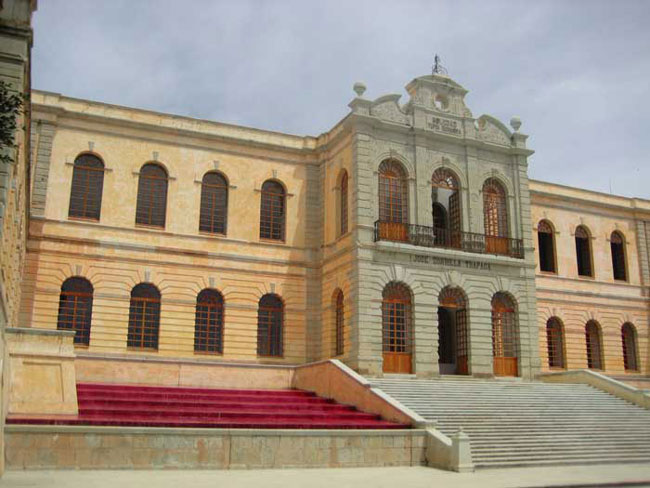
ag1Today, I am in Oaxaca, Mexico, partying (literally) with the Director General of the National Council for Science and Technology (CONACyT), Dr. Enrique Cabrero Mendoza, the Governor of the State of Oaxaca, Gabino Cué Monteagudo, Billionaire Philanthropist Harp Helú, several senior representatives of the Universidad Nacional Autonoma de Mexico (UNAM), many other Mexican officials, and of course dozens of mathematicians who came here from every part of Mexico. The occasion? The announcement ceremony for the funding of a new research facility affiliated with the Banff International Research Station (BIRS). Thanks to a generous land donation from Francisco Toledo (arguably Mexico’s most eminent contemporary artist) and a 43-million pesos infrastructure grant from Conacyt (NSERC’s Mexican counterpart), the BIRS-affiliated Casa Matematica Oaxaca (CMO) is finally becoming a reality. Continue reading

Posted in Banff International Research Station | Tagged , , , , , , | 1 Comment

UBC Board approves improved faculty housing assistance program

It is hiring season at UBC and my inbox was feeling it. “Housing is proving a major factor in our current recruitment round. What is the status of the housing action plan,” wrote a department head. Similar queries were coming from many units currently engaged in competitive recruitment of the best and the brightest. Well, I have good news. The Board of Governors has just approved an improved version of the housing assistance program that was voted in September 2012. And the provost’s office has shifted into high gear in order to accommodate the current recruitment effort.

Continue reading

Posted in Board of Governors, UBC Housing Action Plan, Uncategorized | 5 Comments

Cost-cutting in post-secondary institutions: Rank and Yank, Lift and Shift

All the bulletins open with the same rhetoric: Universities are undergoing historic change due to the sharp downward shift in government funding, hence there is an urgent need to remove redundancy and cost while being able to preserve and improve service levels and academic excellence. 

The same goes for the implementation: Apply a “Dicksonian” approach to prioritize academic programs and services, and if in doubt hire external consultants. And don’t forget to plaster the word “excellence” all over your branding exercise to put a positive spin on what is often a dismantlement of years of collective responsibility, effort and achievement by dedicated faculty and staff. Continue reading

Posted in Board of Governors, Op-eds, Uncategorized | Tagged , , | 3 Comments

Universities in an Era of ‘Non-Lieux’

toopeThere is no shortage of academic topics to blog about. Much harder is to start a new year with a distinctly interesting post. Then, Stephen Toope saved the (my) day by publishing the following seminal post on the U15 blog. I won’t venture a guess on whether “Piece of Mind” readers are normally interested in the prose emanating from the U15, but Toope’s contribution is provocative enough that it warrants a referral. So here it is.

Posted in Uncategorized | 1 Comment

Roasting chestnuts for my favourite hockey players

Happy new year everyone!

And thanks to the 72,000 of you from 140 countries, who viewed this blog in 2013.

IMG_1985

Posted in Uncategorized | Leave a comment

From “shared governance” to “shared services”: Lessons from the University of Michigan

A revolt is brewing at the University of Michigan. More than a thousand faculty members have signed an open letter to President Coleman and Provost Pollack“Restore sanity to the University of Michigan.” A recent article in InsideHigherEd tells the story: “Corporatization” schemes, which are typically packaged and presented as necessary and consistent with a commitment to continued excellence … can upend core academic values of transparency, and shared governance, and strike at the heart of workplace equity.” 
Continue reading

Posted in Board of Governors | 4 Comments

The UBC Faculty Housing Action Plan revisited

Thirteen months ago, a message to the faculty was sent on my behalf as Chair of the UBC Community Planning Task Group, announcing the UBC Housing Action Plan as approved by the Board of Governors. The plan addressed –among other things– the problem of housing affordability for tenured and tenure-track UBC faculty and its impact on the university’s recruitment and retention effort of high-caliber scholars. Last week, the UBC faculty received another message, this time from the Acting Associate Vice President, Campus and Community Planning, calling for consultations on a possibly revised plan. And as anyone could have anticipated, my inbox started filling up with puzzled queries from colleagues: “What is this all about?” and “What’s really happening?” and “What do you think about this?” My task group has already been dissolved, but here are my personal comments on this new development. Continue reading

Posted in Board of Governors, Uncategorized | 16 Comments

Beyond “the homely West-side heritage home” that shelters UBC-Mathematics

I have just received the annual newsletter of the mathematics department (my department) at the University of British Columbia. And I learned a few new facts that are worth sharing. Thanks to an interesting interview with Andrew Weaver, the very first Green party MLA in British Columbia, I learned that he was one of our graduate students. His upcoming Distinguished Alumni Lecture will be on … what else: “Pipelines, Politics and Climate Science”. I presume we are not looking for the energy industry to finance a new building for UBC-math :). I confess that after 6 years on the Board of Governors, you get picky about the facts you want to learn. You start seeing even the most local facts through a more global lens, with an eye towards their potential impact. In any case, here are the facts that I would like my fellow Governors (and everyone) to know. Continue reading

Posted in Board of Governors, Op-eds | Leave a comment

A mathematician at the Global Business Forum

I am just back from the Global Business Forum in Banff. Every year, three remarkable people expend Herculean efforts to oversee the organization of this high-profile gathering. The Forum is sometimes referred to as the “Davos” of the energy industry. It is meant to “create opportunities for international business executives, academics, government officials and other thought leaders to meet, discuss and debate crucial global economic issues.” These highly dedicated and indefatigable individuals are Lois Mitchell, Doug Mitchell and Hal Kvisle. You learn very early on that if and when Lois asks you to contribute to one of the Forum’s discussion panels, you simply do it. And if it happens that you are not an expert on the topic, then you simply try your best, which is what I did this year. Continue reading

Posted in Op-eds, R&D Policy, Uncategorized | Tagged , , , , , , , , , , , , , , , , , | Leave a comment

Lousy reporting targets Canada’s higher education

“An early contender for the worst article of the back-to-school period,” was Alex Usher’s reaction upon coming across an article by Douglas Todd in the Vancouver Sun titled “The pros and cons of foreign students.” Melonie Fullick’s reaction was closer to mine. The article called for a round of “Crap detection in the higher education news.” There is only one use for the article by Douglas Todd: as the ultimate example for students in schools of journalism of what shoddy journalism is all about. Continue reading

Posted in Op-eds, R&D Policy, Uncategorized | Tagged , , , , | 9 Comments

Thank You Notes

The conference held at UBC on the occasion of my 60th birthday has come and gone, and I am still overwhelmed by the generosity and friendship shown by all attendees and organizers. And I am still awed by the powerful, deep and beautiful mathematics displayed by the lecturers. I was warned that I would be exhausted, yet I never felt more invigorated. I was pitied for having to listen to 35 lectures in 5 days, all while sitting in the front row, yet I have never been as attentive to the dazzling display of good mathematics that my friends contributed. I was warned about a banquet turning into a roast, yet never before have I been showered with so much kindness. It is time to say thank you to all those who made this event happen. Continue reading

Posted in Honouring friends | Tagged , , , , , , , , , | Leave a comment

Celebrating Martin Barlow and Ed Perkins

A conference was held last week at UBC on the occasion of the 60th birthday of two of my distinguished colleagues, Ed Perkins and Martin Barlow. I was honoured to be asked to say a few words at a banquet celebrating their achievements. My “words” which unfortunately came just before dessert, could not be few. They allegedly caused the soufflé to sink before it was served. Here is an abbreviated version. Continue reading

Posted in Honouring friends, Uncategorized | Tagged , , | Leave a comment

Canadian Common CV: NSERC vs. Linkedin

“I hope you write a blog post about the shameful time NSERC is wasting for all of us dealing with the Canadian Common CV website!!!” My friend was referring to NSERC’s new “Portal” to be used to “manage application and peer review processes, acceptance of awards, notification of results and reporting.” But first you have to enter your Canadian Common CV (CCV), which will replace the standard Form 100 for researcher’s Personal Data. Now I confess that I still haven’t used the new system yet. My next application for a research grant is one year away, but more significantly, I was discouraged by the following NSERC bulletin. “We strongly encourage the research community to start entering their data once the template is available as it can be time consuming to populate the fields the first time.” I figured that if they are warning us about how time consuming it is, then this must be even more daunting than some of the grueling data collections and surveys they have subjected the research community to (without warning) in the not so distant past. Then came this. Continue reading

Posted in Honouring friends, Op-eds | 26 Comments

“Hard to imagine such a speech made here by any of our elected officials”

That’s what Paul, my science policy soulmate, wrote me recently. He was referring to a speech by Elizabeth Truss, the UK Parliamentary Under Secretary of State for Education, addressed to the International Student Science Fair. I am reproducing it below for two reasons. First, it is really good, and second, I am hoping it would somehow reach those cabinet ministers in the newly reshuffled Harper Government, who are now occupying one of the five positions with the most “sciency-ness,” starting with Greg Rickford, who is replacing Gary Goodyear as Minister of State for Science and Technology. The speech should also interest Leona Aglukkaq (Minister of the Environment), Gail Shea (Minister of Fisheries and Oceans), Joe Oliver who remains Minister of Natural Resources, and Rona Ambrose, Minister of Health and responsible for CIHR. Continue reading

Posted in R&D Policy, Uncategorized | 2 Comments

Oaxaca to join Banff as a hotbed for the mathematical sciences

ag2The Banff International Research Station for Mathematical Innovation and Discovery (BIRS) is now accepting proposals for its 2015 program. BIRS will again be hosting a 48-week scientific program at its station in Banff. There is also a possibility (to be confirmed later) that BIRS will be running an additional 20-25 workshops at its developing new station in Oaxaca, Mexico. Continue reading

Posted in Banff International Research Station | 1 Comment

UBC Presidential Search Committee: Large yet not representative enough

“I understand you have been elected to serve on the Presidential Search Committee. Thank you so much for taking this important task on,” wrote the Chancellor. It is of course always nice to hear that you have once again gained the confidence and trust of your colleagues (Many thanks to the 561 of you who voted!). Yet, something didn’t feel right. The memo was of course reminding me that I was in effect taking on yet another responsibility for the next eight months, but this had never phased me before. My discomfort was originating from my duty on the Management Resources & Compensation Committee (MRCC) of the Board of Governors. Continue reading

Posted in Board of Governors, UBC Presidential Search | Leave a comment

Your library $$ at work: Elsevier offering $60 to editors for each paper they process

A little over a year ago, a petition for boycotting everything Elsevier was initiated following a blog post by Tim Gowers about his position on the issue. I vaguely remember talking about it with my UBC colleague, Greg Martin, who is on the editorial Board of the Journal of Number Theory (JNT), another one of Elsevier’s journals. He told me then that he wanted to give the publisher a chance to improve or change its ways. Yesterday, he decided to resign from the editorial board of JNT, and sign the petition. Today, another UBC colleague, Mike Bennett wrote: “After much reflection, I will follow Greg’s lead and also resign from the editorial board of JNT after 9 years.” Greg also received today an interesting response from Elsevier publisher, Laura Schmidt, where she comments, among other things, about Elsevier’s offer for editorial honoraria. More about that later. For now, I am reproducing  below Greg’s resignation letter, with his permission. See also Tim Gowers’ blog and the related comments. Continue reading

Posted in Op-eds | 4 Comments

Salary arbitration: Is the UBC Administration putting its respectable legacy on the line?

Thousands of UBC faculty members are without a contract since July 1, 2012 even though negotiations between the Administration and the Faculty Association (FA) started back in February 2012. After several failed attempts at direct bargaining, the parties have now decided to resort to arbitration. On May 8th, they exchanged their formal submissions to the arbitrator, and yesterday they disclosed their reply submissions. The actual arbitration will take place on June 3-5, 2013, but the decision may not come before the fall of 2013, almost 20 months after the start of the bargaining process. Regardless of what the arbitrator’s decision will be, I see at least one major loser emerging out of this whole affair: The outgoing UBC administration, which may be unwisely putting its –otherwise very respectable– legacy on the line. Continue reading

Posted in Board of Governors | 1 Comment